

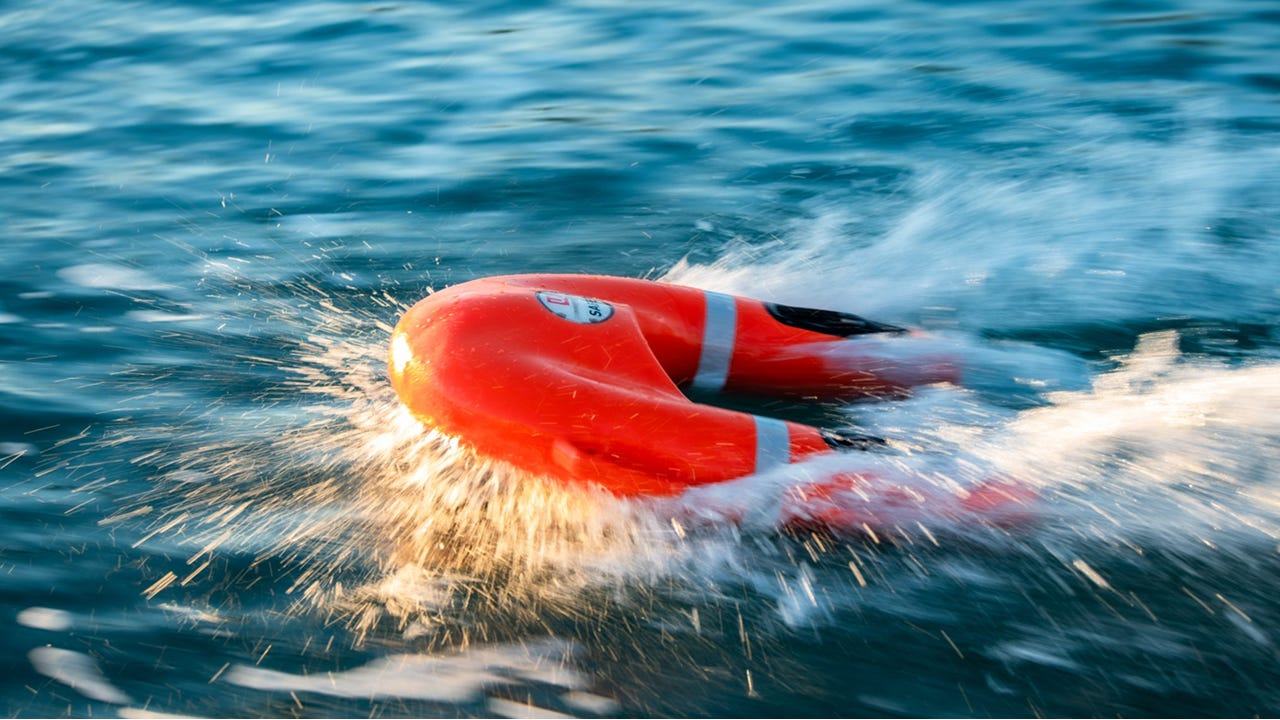
#UAE #Dubai #smartcities – Dubai Municipality has deployed an integrated AI-powered beach safety system across Dubai’s public beaches, combining the region’s first use of the U SAFE aquatic rescue robot with aerial water-rescue drones. The system is a regional first, enabling lifeguard teams to reach swimmers in distress at speeds up to five times faster than traditional swimming rescues, across a range of up to one kilometre. The deployment covers all five of Dubai Municipality’s public beaches and signals a deliberate shift from reactive to proactive coastal safety management.
SO WHAT? – Beach drownings remain a persistent public safety challenge across the Gulf, where year-round coastal activity and a large transient visitor population place constant pressure on lifeguard teams. Dubai Municipality has not simply added new equipment, in effect it has restructured the rescue response model itself. By putting the initial rescue phase in the hands of a remote-controlled robot, response times drop sharply, while risk to human lifeguards is kept to a minimum.
Here are some key points about the
Dubai Municipality has deployed the U SAFE aquatic rescue robot across its public beaches, marking the first deployment of this technology in the Middle East. The remote-controlled, self-propelled device was developed and manufactured in Portugal by Noras Performance.
The U SAFE robot travels at speeds up to five times faster than a lifeguard swimming to a swimmer in distress, operates at a range of up to one kilometre within line of sight, and can tow up to 500 kilograms (enough to support multiple people in the water simultaneously).
The robot’s U-shaped hull and twin turbine design allow it to operate regardless of which side faces up, making it effective in rough seas and rocky coastal conditions where traditional rescue vessels and swimmers face significant risk.
U SAFE was recognised as a CES 2023 Innovation Awards Honoree in the Human Security for All category, selected from more than 2,100 applications. It was previously named best product at the Global Naval Industry awards in 2019.
Alongside the aquatic robot, Dubai Public Beaches has already introduced a water rescue drone that functions as a flying lifebuoy. It can deploy rapidly over water, land directly on the sea surface and provide immediate buoyancy support to people in distress.
The rescue drone carries a live-feed camera that streams real-time visuals to lifeguard teams on shore, enabling faster incident detection, more accurate risk assessment and better-coordinated rescue operations across wide coastal areas.
The robot and drone operate as part of an integrated framework supported by trained lifeguard teams, continuous monitoring and centralised control systems, combining air and water-based response capabilities for complex or time-critical incidents.
The system is deployed across all five of Dubai Municipality’s public beaches: Umm Suqeim 1 Night Beach, Jumeirah 1, Jumeirah 2, Jumeirah 3 Night Beach and Al Mamzar, covering the emirate’s most heavily used coastal areas.
ZOOM OUT – Today's deployment is part of a continuing long-term programme of coastal safety innovation in Dubai. Back in 2016, Dubai Municipality was already showcasing drone-based rescue technology, with plans to roll out lifebuoy-dropping drones across every public beach by 2017. Those early drones could reach 300 metres in five to six seconds, cover up to seven square kilometres and use thermal cameras to locate swimmers at night. Nearly a decade on, the technology has advanced considerably and the latest deployment of U SAFE aquatic rescue robot once again expands the options available to lifeguards and rescue teams, ultimately allowing them to saving more lives..
[Written and edited with the assistance of AI]