

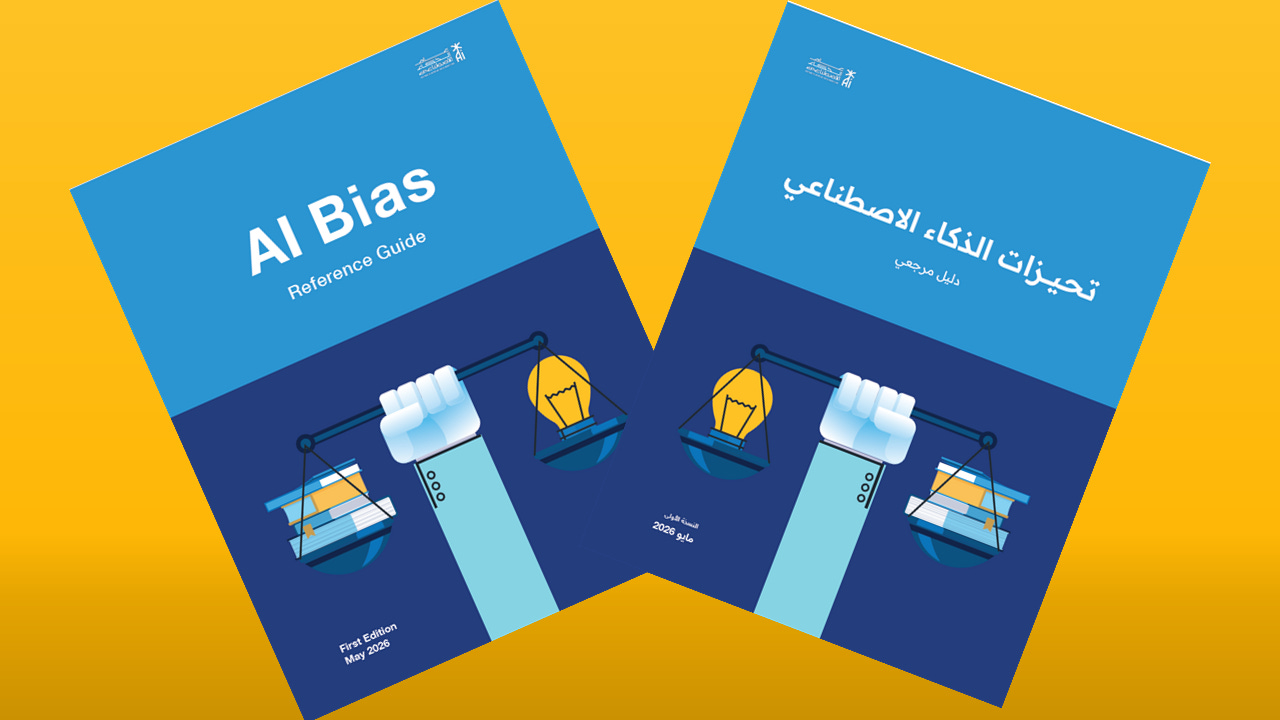
#SaudiArabia #governance - Saudi Data and Artificial Intelligence Authority (SDAIA) has released the first edition of its AI Bias Reference Guide, identifying more than 100 types of bias that can affect the accuracy and fairness of AI systems. The guide explains how each form of bias arises, its potential impact on society, and gives real-world examples and mitigation strategies. Sectors like justice, healthcare and education are flagged as particular areas of concern given how heavily they are beginning to rely on AI-driven decision-making.
SO WHAT? - Bias guides are common enough, but naming and cataloguing over 100 distinct types is quite granular for a national AI authority. One of a number of guides and frameworks issued by SDAIA recently, it shows the authority is trying to elevate knowledge levels about AI bias, ethical principles and risks, whilst providing practical information for AI builders and decision-makers. As AI adoption across public and private sectors continues to accelerate, risk naturally increases. SDAIA is playing a key role in helping to educate the market and provide information that organisations can use to mitigate risk and embrace responsible AI practices.
KEY POINTS;
The new AI Bias Reference Guide from the Saudi Data and Artificial Intelligence Authority (SDAIA) identifies more than 100 types of bias that could affect the accuracy and fairness of AI systems, with definitions, causes, societal impact and mitigation strategies for each.
The guide flags justice, healthcare and education as sectors of particular concern, in light of the rapid adoption of AI in decision-making processes that directly affect individuals.
SDAIA warns that unchecked bias can turn AI systems from tools that promote fairness into mechanisms that reinforce discrimination, damaging institutional reputation and creating legal liability.
Sources of bias identified in the guide include unrepresentative training data, algorithms that unintentionally favour certain characteristics, and flawed assumptions made during data interpretation.
One cited example: recruitment tools that favour candidates from elite educational backgrounds over equally qualified applicants from less privileged backgrounds.
The guide builds on SDAIA’s earlier work, including its AI Ethics Principles, Generative AI Principles for government entities and the public, and its AI Adoption Framework.
The new guide follows SDAIA’s prior study, Bias in Artificial Intelligence Systems: Challenges and Solutions, which examined where bias emerges across AI development stages.
The guide also complements the National Artificial Intelligence Risk Management Framework, a four-phase methodology covering scope definition through to continuous monitoring, which classifies AI risks into seven main categories.
[Written and edited with the assistance of AI]
Source: SDAIA
DOWNLOADS
Read more SDAIA news:
Saudi culture ministry signs AI MoU with SDAIA (Middle East AI News)
Saudi Arabia launches national AI risk framework (Middle East AI News)
SDAIA’s digital learning sandbox earns recognition (Middle East AI News)
SDAIA trains 215 students from 28 universities (Middle East AI News)
SDAIA sets rules for selling state data (Middle East AI News)