

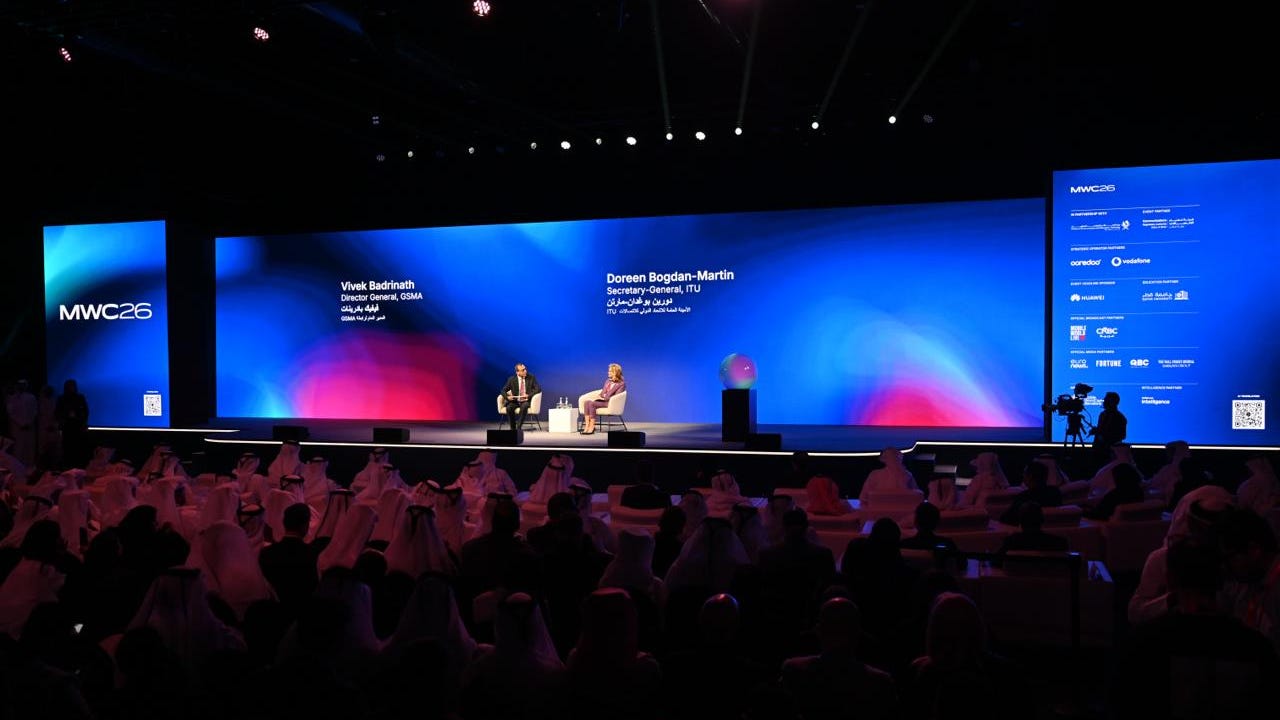
#MENA #digitaltransformation - Middle East and North Africa (MENA) enterprises plan to spend an average 9.3 percent of revenues on digital transformation through to 2032, and they expect a 197 percent return. GSMA Intelligence, the research arm of mobile industry body GSM Association (GSMA), surveyed 885 enterprises across ten MENA countries. One in nine has postponed investment in the past two years because of telecoms policy and regulation. AI and 5G will take 32 percent of spending. The findings were presented at MWC26 Doha.
SO WHAT? - MENA’s digital transformationspending plans sit close to the global average of 9.6 percent, so the region isn’t short of ambition. However, cost, integration and regulation are slowing projects, and 8 percent of firms have cancelled projects entirely. The survey evidence could provide telecom regulators key insights on what enterprises want to see changed.
KEY POINTS:
GSMA Intelligence, the research arm of mobile industry body GSM Association (GSMA) has announced a new survey covering 885 enterprises across ten MENA countries, including 423 in five GCC countries. It forms part of a global study of 6,342 enterprises across 50 countries and ten vertical sectors, run between May and July 2026.
Enterprises in the UAE and Saudi Arabia plan to spend above the global average, at 10.9% and 10.7% of revenues respectively. The MENA average is 9.3% against 9.6% globally, and expected returns are 197% against 207%.
Cost of implementation and integration with existing systems are each cited by 41% of MENA enterprises as a challenge. Only 3% say they currently face no implementation challenges at all.
Some 61% of MENA enterprises say current telecoms policy supports their transformation, matching the global figure. In the GCC the share rises to 70%. Meanwhjile, 28% across MENA say current frameworks actually hinder them.
Among those organisations that see regulatory frameworks as a challenge, half name licensing and authorisation regimes as a barrier. Data protection, privacy and digital identity compliance follows at 43%, then sector-specific rules at 42%.
Over the past two years, 11% of MENA enterprises postponed some investment and 8% cancelled projects due to regulation. The survey also found that 15% changed technology choices and 13% lowered expected returns as a result of regulatory restrictions. Overall, 27% report a negative impact from their regulatory environment, against an average of 24% globally.
Accelerating deployment of digital infrastructure, including 5G, AI, cybersecurity and cloud, is cited by 44% of those surveyed as the the top policy priority. Qatari firms put regulatory agility first, and so do UAE firms, while Saudi and Moroccan firms favour faster infrastructure deployment.
Over the next three years, 57% of MENA enterprises would like to see regulators to prioritise AI and 57% want to see cybersecurity prioritised. Connectivity networks follow in third priority, voiced by 56% of respondents.
AI and 5G together will account for 32% of transformation spending to 2032. Some 69% of MENA enterprises rank 5G as their most important connectivity network, against 66% globally. Some 44% already use AI in advanced ways, and 60% of those report a clear positive impact.
[Written and edited with the assistance of AI]
Source: GSMA
LINK
Access the report (Registration required)
Read more GSMA news:
KU opens new RF AI model to telecom operators (Middle East AI News)
Khalifa University built AI model tops telco leaderboard (Middle East AI News)
GSMA & Khalifa University test agents on telecom tasks (Middle East AI News)
GSMA whitepaper sets out role for agentic AI in 6G (Middle East AI News)
GSMA, Khalifa University to develop new TelecomGPT (Middle East AI News)