

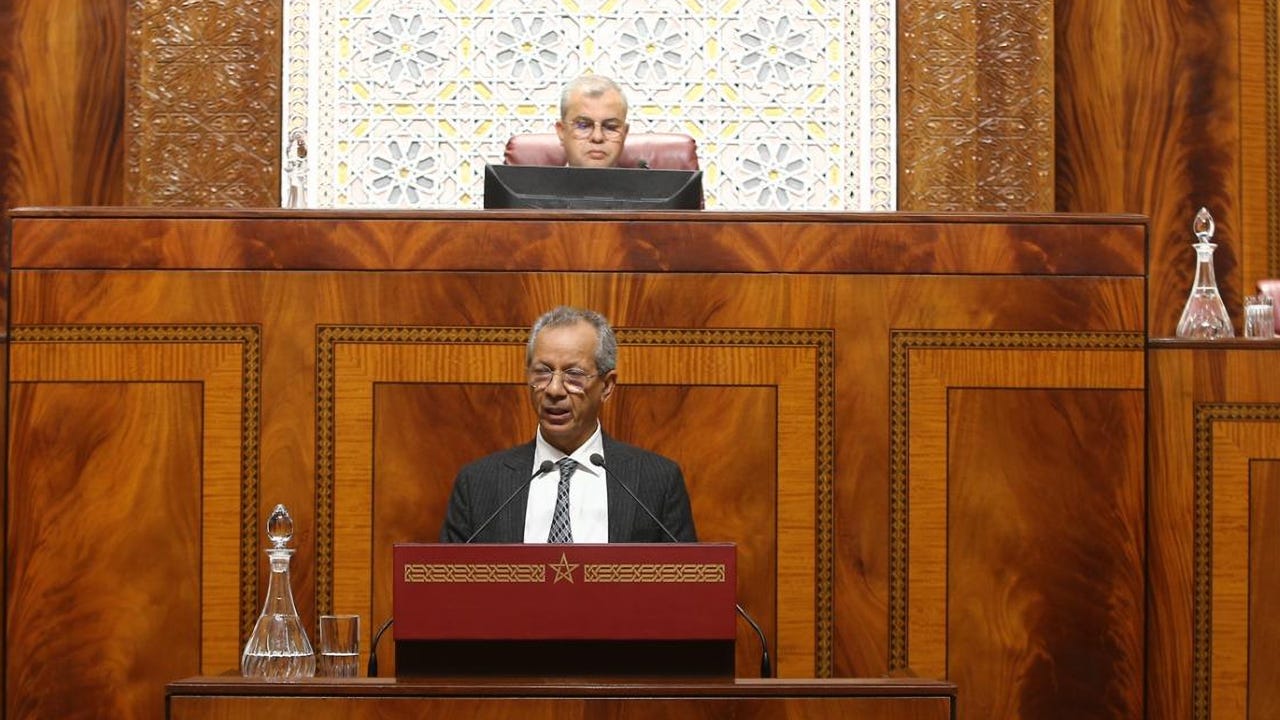
#Morocco #AIstrategy - Morocco plans a new startup fund with a target of MAD 2.5 billion ($256m) as part of a push to build ‘AI Made in Morocco’. Minister of Artificial Intelligence, Digital Transition and Administrative Reform Ahmed Rahhou set out the plan to parliament in Rabat. It also covers the national JAZARI Institute network, worker retraining and AI pilots in public administration. The goal is for Morocco to develop AI, not just import it.
SO WHAT? - The new startup fund directly supports the AI Made in Morocco national artificial intelligence strategy announced in January. The strategy targets a 100 billion dirham ($10 billion) contribution to GDP by 2030, the creation of 50,000 AI-related jobs and training of 200,000 graduates in AI skills. Morocco intends to become a producer rather than just a consumer of AI technologies. The new funding will help align Moroccan startups to support that effort.
KEY POINTS:
Morocco’s government intends to create a MAD 2.5 billion ($256m) financing mechanism for startups, and plans to speed up its implementation to encourage private investment, innovation and job creation in AI.
Minister Ahmed Rahhou told the House of Representatives that Morocco wants to be an active player in AI development, following King Mohammed VI’s call for a new generation of national strategies.
The ministry will prioritise the “AI Made in Morocco” roadmap alongside the broader “Morocco Digital 2030” strategy, focusing on projects that deliver measurable results for the economy, public institutions and society.
The JAZARI Institute network will be rolled out faster, with four components due to become operational soon and the network eventually extending to regions across the country.
Morocco will build its capacity to develop and manage data and language models, alongside investment in cloud computing and computing power, so locally designed AI reflects its linguistic and institutional needs.
The ministry will work with sectors to identify jobs most exposed to AI, then design continuous training and retraining programmes to help workers adapt.
Public administration pilots will test AI for processing files, analysing data, drafting reports and supporting officials’ decisions. Two assistants are in development, one to help firms handle administrative procedures and one to search laws and help draft decrees.
The government will issue guidelines and practical tools for responsible AI use in public bodies, covering personal data protection, cybersecurity and transparency, and will encourage very small, small and medium-sized firms to adopt AI.
ZOOM OUT - Morocco recently elevated AI up its political agenda, when a cabinet reshuffle renamed its digital ministry the Ministry of Artificial Intelligence, Digital Transition and Administrative Reform. Ahmed Rahhou, a 68-year-old former banker, competition regulator and EU ambassador, now leads it. He replaced computer science professor Amal El Fallah Seghrouchni, who held the brief from October 2024. AI was already central to the ministry’s work, so the change is mostly one of title. Now, Morocco joins a small group of countries with a dedicated AI portfolio.
[Written and edited with the assistance of AI]
Source: MIATNRA
Read more about Morocco:
Morocco’s CIRES builds sovereign NVIDIA AI Factory for ports (Africa AI News)
Morocco names Ahmed Rahhou minister for AI and reform (Africa AI News)
Morocco, Mistral partnership releases Darija AI (Middle East AI News)
Morocco to train 100,000 AI workers annually (Africa AI News)
Morocco Union calls for protection of outsourcing jobs (Middle East AI News)