

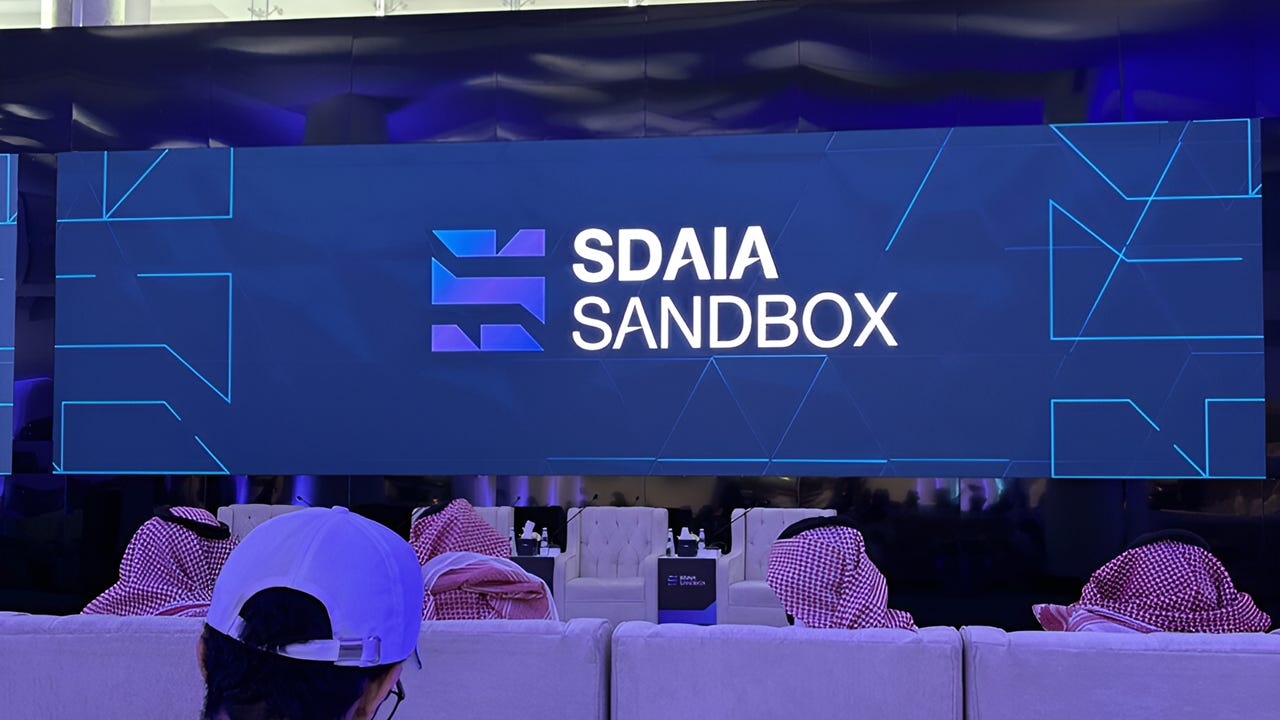
#SaudiArabia #education — The World Bank Group has highlighted Saudi Arabia’s pioneering national model for responsible AI innovation in education as a global case study. Created by the Saudi Data and Artificial Intelligence Authority (SDAIA) and led by the National eLearning Center (NeLC), the AI Sandbox for Digital Learning provides a structured environment where innovators, researchers and educational institutions can develop and test AI-powered learning tools in real classrooms before wider deployment. Since launching in late 2024, the programme has received 652 submissions, run three cohorts, and engaged 2,884 participants through training and applied learning activities, with users joining from more than 55 countries.
SO WHAT? — While most countries are still debating how to introduce AI into education responsibly, Saudi Arabia is pioneering it. SDAIA has built infrastructure to test AI in education systematically, and the World Bank has now held that up as a global best practice example for others. What makes the model distinctive, according to a World Bank report, is that it combines experimentation, ecosystem coordination, governance oversight and capability-building inside a single national platform.
KEY POINTS:
A World Bank Group study has found that Saudi Arabia’s AI Sandbox for Digital Learning occupies a distinctive position internationally, combining structured experimentation, implementation learning, ecosystem coordination, capacity-building and responsible AI governance within a single platform.
Developed by the Saudi Data and Artificial Intelligence Authority (SDAIA) and led by the National eLearning Center (NeLC), the initiative is part of the country’s ongoing efforts to support the responsible use of AI across vital sectors.
Since its launch in late 2024, the sandbox has received 652 submissions including seven from international participants, admitted three cohorts for structured testing, and engaged 2,884 participants through capacity-building and applied learning activities.
Platform users have engaged with the initiative from more than 55 countries, reflecting international interest in the Saudi model beyond its original national mandate.
The programme operates across three thematic pathways:
Teach with AI, covering AI-supported classroom practice;
Adaptive Digital Curriculum Development; and Skills Development; and
Workforce Alignment, connecting education outputs to labour market needs.
The World Bank evaluation found the strongest evidence of contribution in ecosystem development, with the AISB exceeding several targets for partnerships, solution testing and institutional engagement, and helping participating innovators access real-world testing environments and regulatory guidance.
Early pilot evidence suggests potential contributions in adaptive learning, learner engagement, accessibility and personalised learning, though the evaluation notes that pilots have been small-scale, with sample sizes between 10 and just over 100 participants over periods of less than six months.
The evaluation flags institutional readiness as a key determinant of whether experimentation translates into adoption, citing infrastructure limitations, workload pressures and the need for stronger follow-up support as recurring considerations across participating institutions.
The World Bank report recommends that the programme strengthens evidence generation, improving pathways from pilot to broader implementation, and building institutional readiness across the wider Saudi education ecosystem, involving the Ministry of Education, ETEC and the National Curriculum Center alongside NeLC.
ZOOM OUT – Saudi Arabia has been systematically adding AI curricula throughout its education system. In September last year, SDAIA and the National Curriculum Centre launched a comprehensive national AI curriculum spanning elementary school and secondary schools. Six million children started AI lessons across the Kingdom’s public school system as they began the 2025-2026 academic year. Meanwhile, this year SDAIA launched the National Cross-Disciplinary Curriculum for University Students in Data and AI to provide university students with practical fundamentals for understanding data and using AI tools.
[Written and edited with the assistance of AI]
Source: SPA, World Bank Group, SDAIA
Read more about SDAIA education and training initiatives:
SDAIA trains 215 students from 28 universities (Middle East AI News)
SDAIA launches national data and AI university curriculum (Middle East AI News)
Saudi Arabia launches SAMAI 2 workforce AI initiative (Middle East AI News)
SAMAI trains over one million Saudis in AI (Middle East AI News)
Saudi Arabia launches AI school curriculum (Middle East AI News)