

#GCC #AIWorkforce - More than four in five professionals across the GCC use AI at least weekly, but only 39 percent feel highly confident with it, according to a new study from Dubai-based diversified conglomerate Al-Futtaim. Just 20 percent of organisations have given staff extensive AI training. Meanwhile, employees who have had AI training are 2.5 times more likely to feel highly confident, and 73 percent of users report better productivity. The report, Unlocking AI for the GCC Workforce, surveyed 1,143 professionals in six GCC markets.
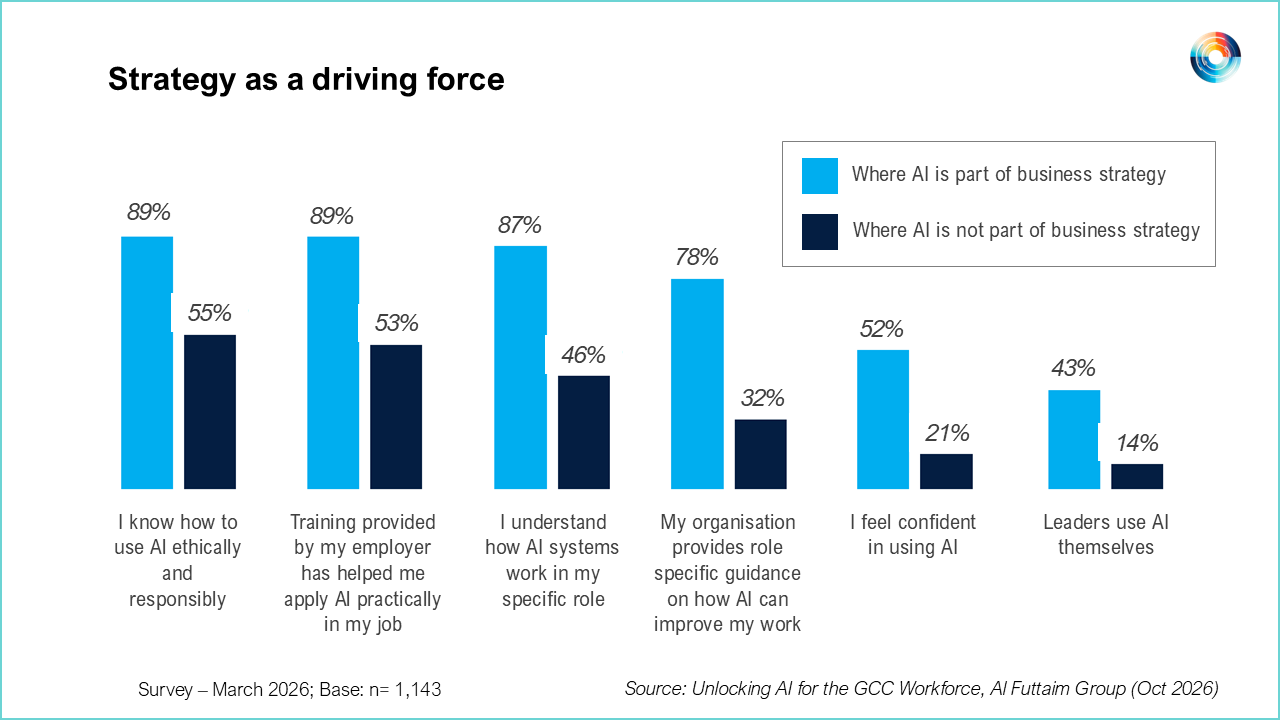
SO WHAT? - Companies are pushing AI on staff faster than they’re teaching them to use it. The study found that trained employees save almost twice as much time each week as untrained colleagues. Training also does nothing for the one worry that holds many people back, data security. The report also found a direct correlation between how positively staff felt about AI in the workplace and whether the organisation had made AI a clear part of its business strategy.
KEY POINTS:
Al-Futtaim has published a new survey and whitepaper called Unlocking AI for the GCC Workforce, which assesses AI adoption across the region. The research is based on a survey of 1,143 professionals across six GCC markets and sectors from automotive to hospitality.
The Al-Futtaim survey found that 82% of respondents use AI daily or at least weekly, and one in three use it every day. 73% report improved productivity, yet only 39% describe themselves as highly confident using the technology.
The study identifies an AI Readiness Paradox, with adoption running ahead of workforce capability. More than half of organisations surveyed actively encourage AI use, but only about 20% have provided extensive training.
According to the report, extensively trained employees are 2.5 times more likely to feel highly confident, report bigger productivity gains and are almost twice as likely to save four or more hours a week. One in four has had no formal training.
In organisations where senior leaders use AI themselves, employee adoption is three times higher. Organisations with a formal AI strategy report much higher workforce confidence and clearer role-specific guidance.
About a third of respondents name data security as their biggest barrier, regardless of age, seniority, industry or training level. The report notes that organisations need governance and responsible AI frameworks alongside skills programmes.
The data shows inconsistencies in the level of AI training given across organisations. Some 47% of professionals aged 45 and over report no formal AI training from their employer, the highest of any age group. Frontline staff and workers in smaller firms are also less likely to get proper AI training.
The white paper also includes perspectives from IBM, Microsoft and Inception42, and draws on perspectives from an industry roundtable held in September. The report concludes that the next phase depends on skills, structures and data foundations, not access to tools.
ZOOM OUT - Al-Futtaim's research study shows that AI engagement is rising with seniority on every metric measured, from daily use to confidence and productivity gains. Meanwhile, extensive training falls from 36 percent among senior leaders to just 8 percent at the frontline, where 42 percent of workers have had no AI training. The report concludes that the people closest to customers tend to be the least equipped to use AI well. According to the research, organisations with a defined AI strategy are more than twice as likely to give role-specific guidance on AI, and their staff report a high degree of confidence.
[Written and edited with the assistance of AI]
Source: Al-Futtaim
DOWNLOAD

Read more about AI’s effect on the workforce:
Workday opens Dubai office, cites 90% AI use (Middle East AI News)
AI is adding to Gulf workloads, survey finds (Middle East AI News)
Dubai government adopts productivity system (Middle East AI News)
Middle East workers lead the world on AI adoption at work (Middle East AI News)
Saudi Arabia launches SAMAI 2 workforce AI initiative (Middle East AI News)